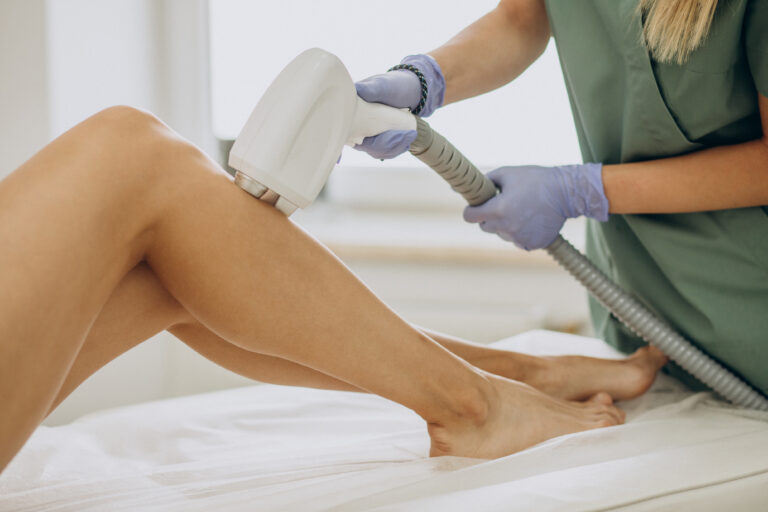

The accurate term is permanent hair reduction, not permanent hair removal. Laser treatment produces a long-term, stable decrease in the number of hairs that regrow in a treated area. No device can guarantee complete or lifelong clearance, and occasional maintenance sessions are normal.
That distinction matters, because it sets honest expectations before you commit to a series. Below is how the treatment works, what results to expect, and how to prepare.
How does laser hair reduction work?
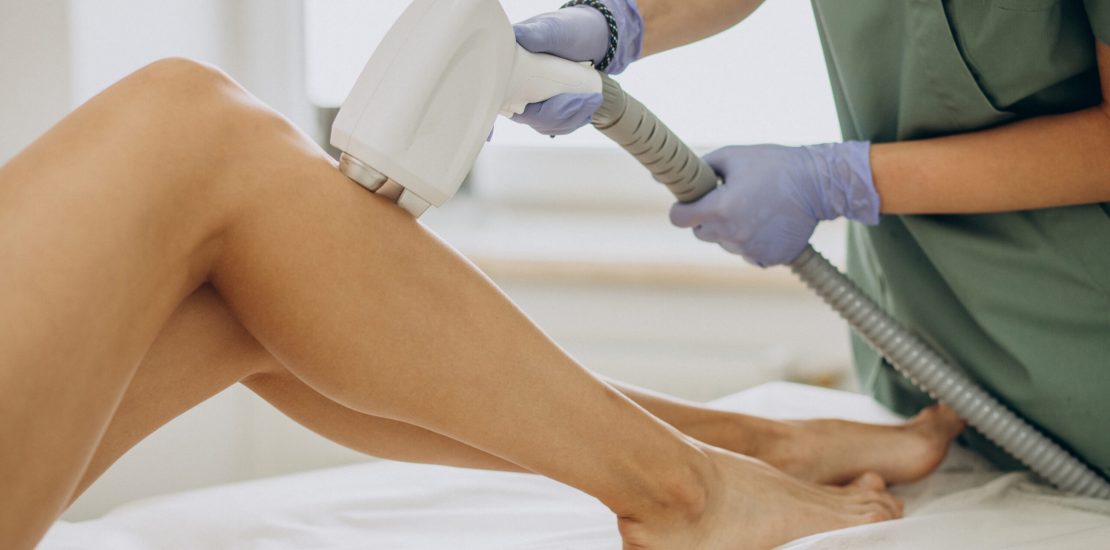
The laser delivers controlled light energy that is absorbed by pigment in the hair. That energy converts to heat, which damages the growth structures inside the follicle while the surrounding skin is protected.
Hair grows in cycles, and treatment only affects follicles that are in their active growth phase at the moment of the session. That is the single reason a series is required rather than one appointment.
How many laser hair removal sessions will I need?
Most people need six or more treatments. The exact number and the spacing between them depend on the body area, your skin tone, your hair color and thickness, hormonal factors, and how your follicles respond.
Facial areas are generally treated more frequently than body areas, because facial hair growth is often hormonally influenced. Your plan may be adjusted as we see how you respond.
What results should I expect?
- Progressive reduction. Hair becomes less dense, finer, and slower to regrow across the series rather than disappearing after one session.
- Maintenance may be needed. Regrowth can occur over time, especially on hormonally influenced areas such as the face.
- Pigment matters. Dark, coarse hair responds best. Blonde, red, gray, and white hair respond poorly because they contain little or no melanin for the laser to target.
Can all skin tones be treated?
Many skin tones can be treated safely when the device, wavelength, and settings are selected appropriately for that patient. Individual risk varies, which is why an assessment matters before any treatment is scheduled.
Does laser hair removal hurt?
Most patients describe a brief snapping or stinging sensation with each pulse. The skin may be cooled before, during, or after treatment to keep you comfortable. Treatment time varies with the size of the area, and you will wear protective eyewear throughout.
How do I prepare for laser hair removal?
Preparation starts well before the appointment itself. Follow this timeline:
| When | What to do |
|---|---|
| 4 to 6 weeks before | Do not wax, tweeze, thread, or use an epilator in the treatment area. Shaving is permitted. |
| 2 to 4 weeks before | Avoid tanning, self-tanner, and unnecessary sun exposure. Tell us if the area has recently tanned or burned. |
| 24 hours before | Shave the treatment area unless you are given different instructions. Avoid irritating the skin. |
| Day of treatment | Arrive with clean, dry skin. Do not apply lotion, oil, deodorant, fragrance, or makeup to the area. |
What to tell us before treatment
Let us know before your appointment if you:
- Are pregnant or trying to conceive
- Take photosensitizing medicines or supplements
- Have recently used isotretinoin
- Have an active rash, infection, open wound, cold sore, or sunburn
- Have a history of abnormal scarring
- Have a tattoo in or near the treatment area
What is the aftercare?
Expect temporary redness or swelling. A mild sunburn-like feeling or small bumps around the follicles may occur and usually improve within hours to one or two days.
- Cool and soothe the skin. Use a cool compress if needed. Apply only gentle, fragrance-free products recommended by your clinician.
- Avoid heat and friction. For at least 24 hours, avoid hot tubs, saunas, very hot showers, strenuous exercise, and tight or irritating clothing over the treated area.
- Protect from the sun. Avoid tanning and use broad-spectrum SPF 30 or higher on exposed treated skin.
- Let treated hairs shed naturally. Do not wax, tweeze, thread, or pick. Shaving is usually acceptable once the skin is comfortable.
Contact us promptly if you experience blistering, crusting, severe or worsening pain, spreading redness, drainage, signs of infection, or an unexpected change in skin color. Seek urgent medical care for severe symptoms.
What are the risks?
Common effects include temporary redness, swelling, and discomfort. Less common risks include blistering, crusting, pigment changes, scarring, changes in skin texture, and rarely increased hair growth around a treated area.
Will laser treatment help with ingrown hairs?
Reducing hair growth may reduce shaving irritation and ingrown hairs. Results vary, and other skin conditions may require separate treatment. If ingrown hairs are your main concern, raise it at your consultation so we can assess whether laser is the right approach, or whether something like a medical-grade chemical peel would help alongside it.
Where we offer laser hair reduction
Laser hair reduction is offered at our La Jolla location at 4225 Executive Square #600, La Jolla, CA 92037. Our La Mesa location on Lake Murray Boulevard offers injectables, microneedling, PRP, peels, and IV therapy, but does not offer laser services.
If pigmentation, redness, or sun damage is your concern rather than hair, IPL skin rejuvenation treats those directly. You can see the full range of what we offer on our treatments page.
Ready to plan your treatment?
Schedule a consultation so we can assess your skin, hair, medical history, and goals, and recommend the safest approach for you. Consultations are complimentary. Request an appointment or call (858) 282-6722.
Written by Fatemeh Esfahani, MD, FACC, founder and medical director of Atossa Medical Spa. Dr. Esfahani is board certified by the American Board of Internal Medicine and performs every treatment personally at both Atossa locations.
Educational information only. This guide does not replace an individual medical consultation or the specific instructions provided by your treating clinician.